
Vlychada Beyond the Beach: Visiting Santorini’s Tomato Industrial Museum
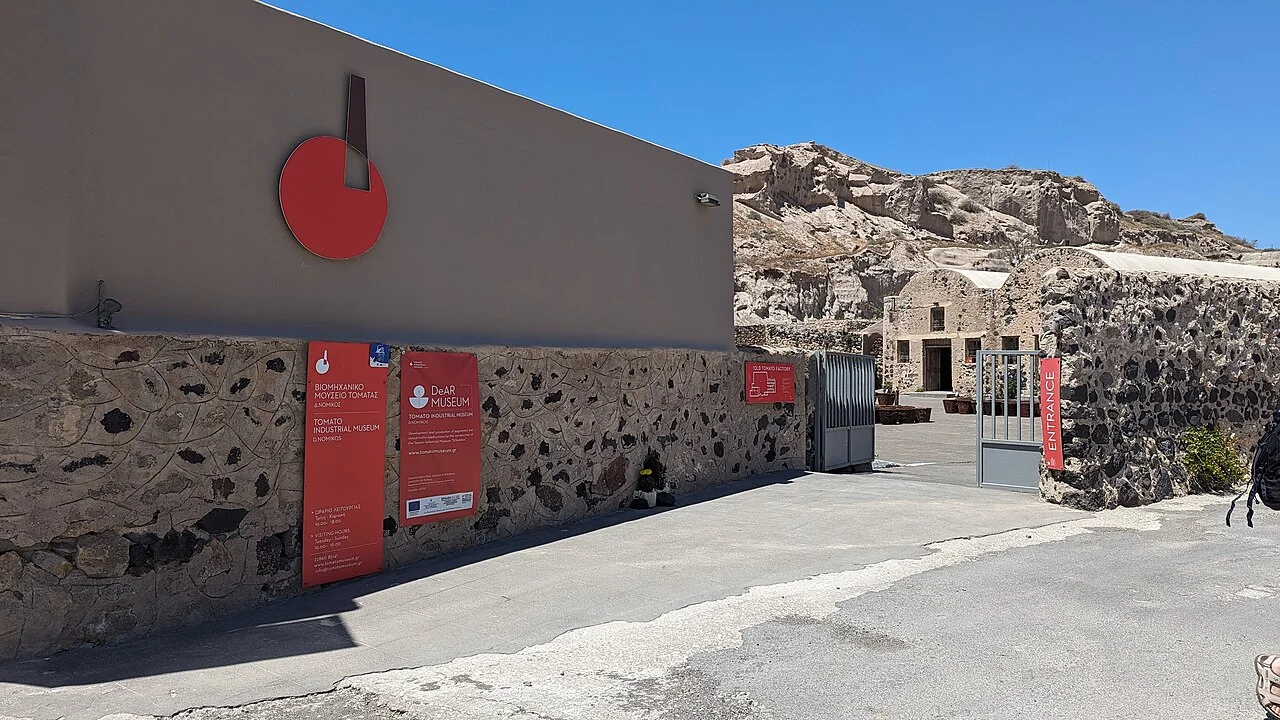
Image: Lajmmoore · CC BY-SA 4.0 · Resized and converted to WebP.
The Tomato Industrial Museum “D. Nomikos” is in Vlychada, inside a former tomato factory. Its official description focuses on Santorini’s small-fruited tomato, the island’s production history and the machinery and stories of the people who worked there. The museum’s published visitor season currently runs from April to November; check the official page for your exact date, especially if you are planning a winter visit.
A factory story on Santorini’s southern coast
Vlychada is often associated with its dark volcanic coastline and sculpted rock formations. The Tomato Industrial Museum gives the area a different focus: how a locally grown crop was cultivated, processed and turned into a product that travelled beyond the island. It is housed in the old D. Nomikos factory, which the museum says was transformed into an industrial museum in 2014.
Santorini’s small-fruited tomato is central to the museum’s story. Its official collection description follows farming and factory production and presents the work and memories of island residents. That makes this a visit about food history, industrial heritage and everyday life, not just a stop for a beach photograph.
What the museum says you can see
The official “The Museum” page describes processing machinery dating from 1890, old factory records and manuscripts, tools, early product labels and audiovisual material with stories from former workers. Its visitor description also lists an audio tour, a film and activities connected with tomato paste and the old sealing machine. These are descriptions published by the museum; exhibition details and what is available on the day should be checked with the venue.
The displays help connect an agricultural product with the factory process behind it. Rather than treating the museum as a general collection of Santorini sights, think of it as a focused account of one crop, one former plant and the people and techniques associated with production. That is the reason to visit even if you have already seen the beaches.
Read the museum’s own collection description before you go. It is the best source for current visitor information and for confirming whether a particular experience, exhibition or activity is operating on your date.
Check the season before planning a visit
The museum’s official visitor page currently publishes a season from April through November and a weekly closing day. It does not publish a regular December-to-March schedule on that page. That is not proof that the venue can never open for a special event, but it does mean a winter traveller should not assume that the exhibition is available.
Check the current official visits page for the schedule and access information. If your planned day falls outside its published season, contact the museum directly and wait for confirmation before treating it as an open attraction. Do not rely on an old travel listing, a cached timetable or a café or beach being open as evidence that the museum itself is open.
This distinction is useful when planning a low-season day. The village, marina, beach and museum are separate destinations; seasonal access to one does not confirm the opening of another. The official museum page places the venue at Vlychada, on Santorini’s south coast, and advises visitors to check its own location and directions.
How to make the most of the stop
- Read the museum’s official visitor page for the date and seasonal schedule before travelling to Vlychada.
- Decide whether your main interest is the factory machinery, local agricultural history or the personal stories described by the museum.
- Check which exhibits or visitor experiences are actually available rather than assuming every element in a general museum description will be operating.
- Plan the beach and the museum as separate stops, and verify each destination’s access and opening status independently.
- Leave time to read the interpretation; this is a compact subject with a specific industrial and food-history focus.
If you are planning a separate coastline visit, the existingSantorini beaches guide covers the island’s volcanic shorelines. It is a different guide from this museum visit: use the museum’s own seasonal notice to decide whether the exhibition is open, and check beach conditions and access separately.
A visit to the Tomato Industrial Museum can add a human and industrial history layer to time in Vlychada, but only when the venue is open. Confirm the date first; if no current opening is confirmed, treat the museum as a future-planning stop rather than a guaranteed activity for today.
Frequently Asked Questions
Where is Santorini’s Tomato Industrial Museum?
The Tomato Industrial Museum “D. Nomikos” is in Vlychada, on the south side of Santorini. Use the official visitor page for current location and access information.
What can you see at the Tomato Industrial Museum?
The museum describes processing machinery, factory records, tools, labels and audiovisual stories about tomato cultivation and production on Santorini. Check its official page for the current exhibits and visitor experience.
Is the Tomato Industrial Museum open in November?
The official visitor page currently lists a season from April through November, with a weekly closing day. Check its live schedule for the specific date and any holiday changes.
Is the Tomato Industrial Museum open in winter?
The official page does not list a regular December-to-March visitor schedule. Contact the museum and wait for confirmation before planning a winter visit.
Is Vlychada beach the same as the Tomato Industrial Museum?
No. The beach and the museum are separate places. Confirm the museum’s opening and access separately from any plan to visit the coastline.