
Santorini Traditional Villages: Pyrgos, Megalochori & Emporio Guide
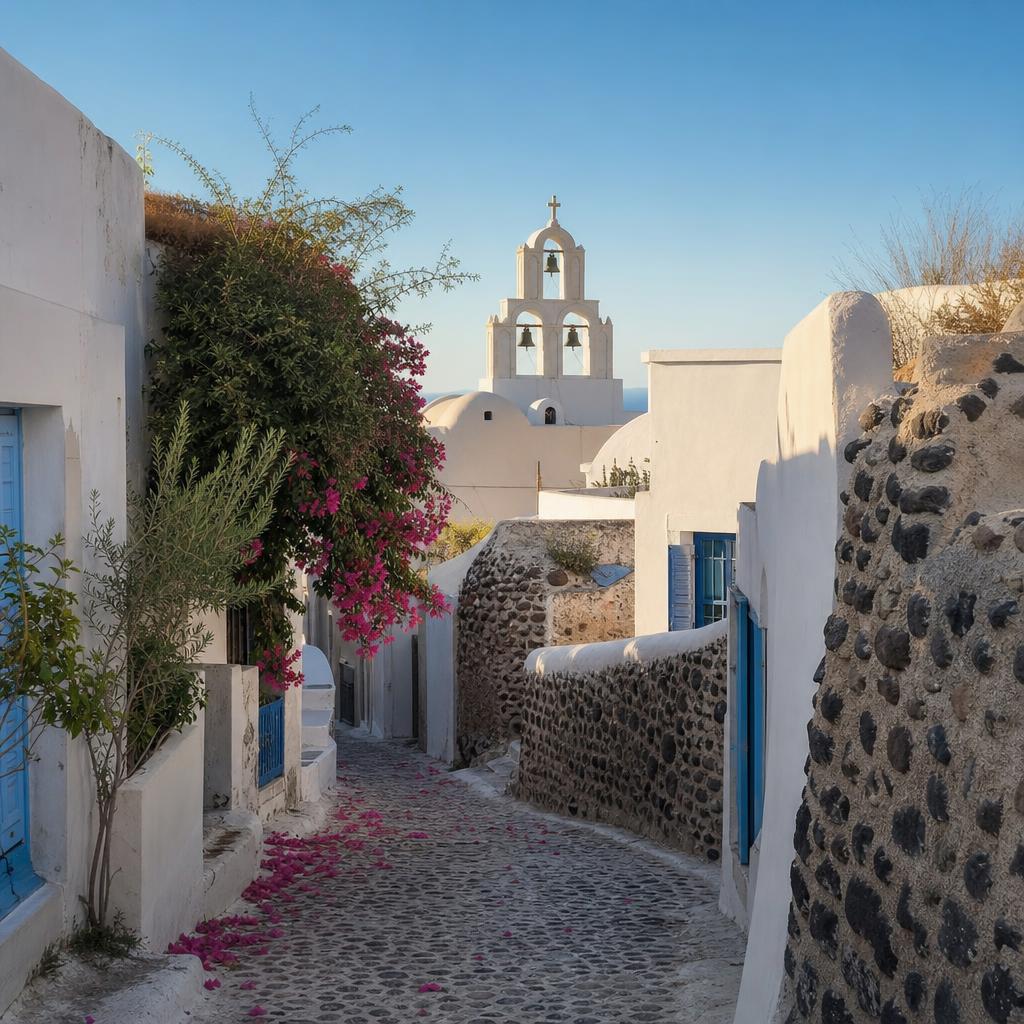
Pyrgos, Megalochori and Emporio are three of the best traditional villages in Santorini for travellers who want hilltop views, quiet lanes, volcanic architecture and medieval history beyond Oia and Fira. Choose Pyrgos for elevated views and hilltop lanes, Megalochori for a slower village and wine-focused stop, and Emporio for fortified medieval streets. Compare their walking conditions before building a route.
Hilltop views → quiet lanes → medieval walls
Build a village day around Pyrgos, Megalochori and Emporio, then leave time for a meal, winery or coastal stop that fits your pace.
If you are looking for the best Santorini traditional villages, begin with the character you want rather than a checklist. Pyrgos offers an elevated village experience, Megalochori rewards slow wandering through elegant traditional details, and Emporio feels more fortified and maze-like. They sit in the island's interior and south, so a thoughtful route can feel very different from a day based entirely around Oia.
These villages are living neighbourhoods, not open-air museums. Keep voices low, respect private doors and courtyards, and avoid blocking narrow lanes for photographs. Check current information for any winery, church, museum or landmark you plan to enter. For a wider local itinerary, combine this guide with our Santorini local guide.
Pyrgos: Hilltop Lanes and Island Views
Pyrgos Kallistis rises inland beneath the island's higher ground. Its lanes climb towards the old settlement and reward travellers who enjoy texture, changing perspectives and a village that feels more layered than a single scenic terrace. The route can include steps and uneven surfaces, so comfortable shoes are more useful than formal footwear.
Give yourself time to look beyond the main viewpoint. Notice the volcanic stone, rounded roofs, small chapels, shaded corners and the way the village protects itself from the wind. A short village walk can become a longer visit when you pause for coffee, a meal or a nearby wine experience, so keep the next appointment flexible.
Village feel
Elevated, historic and ideal for travellers who enjoy lanes with changing views.
Notice
Volcanic masonry, old courtyards, churches and the compact shape of the settlement.
Plan for
Steps, slopes and a slower visit than a quick roadside photo stop.
Megalochori: A Slower Traditional Santorini
Megalochori is a natural choice for travellers who want traditional architecture, quiet lanes and a calmer pause between larger island stops. The village has a strong connection with Santorini's agricultural and wine heritage, and its compact centre is best appreciated without trying to hurry from one photo point to the next.
Look for the details that are easy to miss from a vehicle: old cave-style structures, simple facades, bell towers, shaded squares and the contrast between pale walls and dark volcanic ground. If you plan a winery visit nearby, confirm its current reservations and access separately. Our Santorini winery guidecan help you understand the wider wine landscape.
Emporio: The Fortified Village Experience
Emporio has a different visual language from the caldera settlements. The old Castelli area narrows into lanes shaped by defensive needs, creating turns, arches and stone edges that reward unhurried exploration. It is one of the best places to understand how a Santorini settlement can feel intimate, protective and almost labyrinthine.
Wear shoes with grip and be mindful of steps, uneven paving and residential access. Emporio works well as part of a south-island route with Perissa, Perivolos, Akrotiri or a winery, but the right combination depends on the season, traffic and how much walking your group wants to do.
Why visit Emporio
For medieval atmosphere, narrow lanes, volcanic stone and a village experience that is not defined by a caldera panorama.
What to remember
Keep the route respectful and realistic; residential lanes are working spaces, and vehicle access may stop well before the historic core.
A Practical Pyrgos–Megalochori–Emporio Route
The three villages can form a rewarding half-day or full-day outline, depending on your starting point and the stops you add. Begin with the village that matters most to you, then work towards the next location without stacking tight reservations. A route from Pyrgos to Megalochori and then Emporio creates a strong contrast between hilltop lanes, traditional central-island architecture and a fortified southern settlement.
- Start in Pyrgos if hilltop atmosphere and views are your priority.
- Continue to Megalochori for a slower walk and a meal or wine stop.
- Explore Emporio when you want fortified lanes and volcanic masonry.
- Add a beach, archaeological or winery stop only if the day remains comfortable.
- Finish at a practical road meeting point agreed before the walk.
If your group prefers the coast, pair Emporio with the black-sand beaches around Perissa and Perivolos. If history is the priority, compare the route with our archaeological sites guide. The best village itinerary leaves enough time for the places themselves instead of turning every stop into a timed transfer.
How to Move Between Santorini Villages
Public buses can suit travellers with flexible timing, while taxis and private transfers make a multi-village route easier to coordinate. Self-driving gives independence but requires attention to narrow roads, parking and the possibility that the final approach is on foot. The right choice depends on your accommodation, group size, luggage and whether you plan to taste wine.
A private transfer is particularly useful when you want to connect villages with a hotel, airport, port or dinner reservation without carrying the whole day's logistics yourself. Share the exact village areas, preferred walking time and any mobility or child-seat requirements before requesting a quote. Do not assume a vehicle can enter every historic lane.
If you want one vehicle to connect several villages and stops, compare a private Santorini transfer with the multi-stop experiences listed under private Santorini tours.
Travellers with limited mobility should assess each village at street level rather than relying on a general label. Slopes, stairs, cobbles, shade and the final distance from a road can differ within the same settlement. Our accessible Santorini travel guideexplains how to ask the useful questions before the day begins.
What to Notice on a Village Walk
- Volcanic stone used around walls, arches and older building details.
- Cave houses, narrow passages and facades shaped by the island climate.
- Bell towers, chapels and small squares that anchor village life.
- Doors, courtyards and working spaces that should be photographed respectfully.
- How the light and wind change between a hilltop, an interior lane and the coast.
The appeal of Santorini's inland villages is their texture and pace. Take a few meaningful stops instead of collecting the same photograph three times, drink water, and let the route change when the heat or walking surface asks for a slower plan. KC Travel can organise the road connections around the villages you most want to experience.
Book Your Santorini Transfer
Your driver, your route, and a smooth arrival from the airport or port to your hotel.
Check Availability →Santorini Traditional Villages FAQ
Which traditional villages should I visit in Santorini?
Pyrgos, Megalochori and Emporio make a strong village-focused route because each has a different character. Pyrgos is known for its hilltop setting, Megalochori for its calm lanes and traditional details, and Emporio for its fortified medieval settlement.
Is Pyrgos or Megalochori better for a Santorini village visit?
Pyrgos suits travellers who want a higher village setting and broad island views, while Megalochori is a good choice for slower walks, traditional architecture and a relaxed central-Santorini atmosphere. The better option depends on walking comfort, timing and the rest of your route.
What is special about Emporio Santorini?
Emporio has a distinctive medieval character, with narrow lanes and the fortified Castelli area forming a different experience from the open caldera villages. Explore carefully, respect residential spaces and allow time for uneven surfaces and steps.
Can I visit Pyrgos, Megalochori and Emporio in one day?
A focused village day can include all three, but the pace depends on your start point, walking time, meal stops and transport. Choose the villages that match your interests and confirm current access or opening information for any winery, church or attraction you plan to visit.
How do I get around Santorini's traditional villages?
Options include public buses, taxis, a private transfer or a self-drive plan, depending on your itinerary and comfort. Road access and parking differ between villages, so agree on practical meeting points instead of assuming every narrow lane is vehicle-accessible.
Are Santorini's traditional villages suitable for people with limited mobility?
Accessibility varies by village, lane, surface, slope and exact destination. Ask about the specific route and meeting point in advance rather than relying on a general village label. Our accessibility guide explains why the final walking distance matters.