
Best Santorini Photo Spots: A Photography & Golden Hour Guide
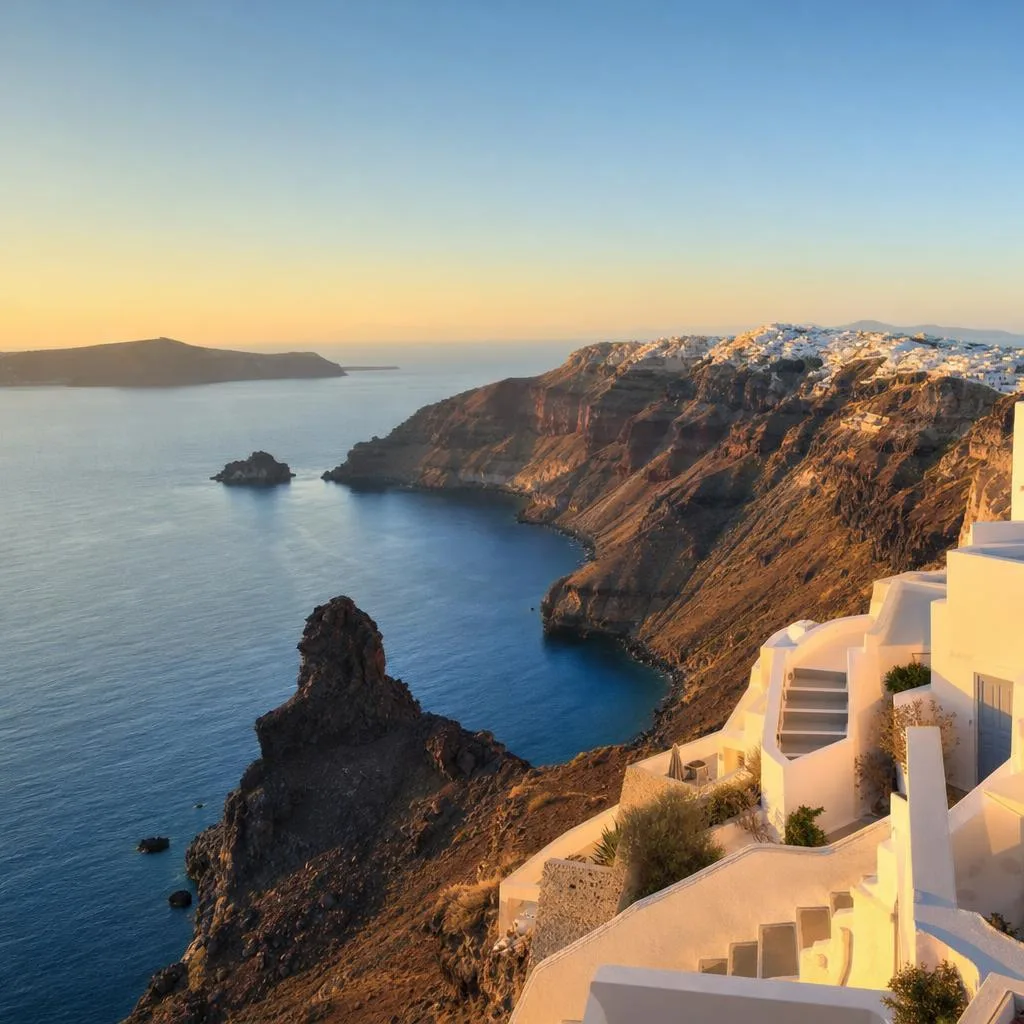
Santorini beyond the postcard is a landscape of changing light: white Cycladic walls, volcanic cliffs, inland villages, dark beaches and the deep Aegean Sea. The best photographs come from matching each place with the right time of day—not from repeating one famous Oia view.
Where Are the Best Photo Spots in Santorini?
The best Santorini photo spots are spread across the island. Oia provides iconic Cycladic architecture, Imerovigli gives elevated caldera geometry, Fira and Firostefani add lively urban viewpoints, Pyrgos offers broad island panoramas, and Megalochori and Emporio reveal arches, doors and volcanic-stone details. Around Akrotiri and the eastern coast, cliffs and dark beaches replace whitewashed lanes with a more geological visual story.
A useful Santorini photography plan therefore asks three questions: what landscape do you want, where does the light fall, and how will you move between locations? Sunrise, afternoon, golden hour and blue hour can make the same village feel completely different. Weather, haze, wind and seasonal crowd levels also affect what is possible.
When Is the Best Light for Photography in Santorini?
Sunrise usually brings cooler tones, longer shadows and a quieter start. It can suit east-facing coastal areas and village streets before daily activity builds. Morning light is often easier for architectural details because white walls retain texture without the strongest overhead contrast.
Around midday, the sun can flatten distant landscapes and create hard shadows beneath arches and balconies. This does not make photography impossible: use the time for shaded lanes, close architectural details, interiors where photography is permitted, or a meal while waiting for softer light.
Golden hour warms the caldera, villages and volcanic ridges. Sunset can add color and silhouettes to the landscape, while blue hour after the sun has gone can balance the remaining sky with village lights. Exact sunrise, sunset and golden-hour times vary throughout the year, so check reliable local times for your travel date rather than using a fixed schedule.
Oia: The Famous Santorini View
Oia is visually distinctive because white cave houses, churches, lanes and terraces sit above the northern caldera. Different paths reveal blue domes, layered rooftops, Thirassia and the sea; one crowded viewpoint is not the entire village. Early morning favors quiet architectural scenes, while late afternoon and sunset bring warmer light and more visitors.
Photograph from public paths and established viewpoints. Do not step onto roofs, church domes or private terraces to reproduce a familiar composition. For evening planning and alternatives to the castle area, read the Santorini sunset guide.
Imerovigli: Elevated Caldera Photography
Imerovigli sits high on the caldera rim and is one of the best Santorini viewpoints for scale. The village looks across the volcanic islands and along the curve toward Oia, making it useful for wide landscape frames, compressed cliff layers and changing light on the rock.
Golden hour can reveal the caldera’s contours, but the exact direction and quality of light depend on season and weather. Skaros Rock adds a powerful foreground from suitable public viewpoints. Its trail includes uneven ground, steps and exposed sections, so photography should never take priority over footwear, daylight or safe access.
Firostefani and Fira: Urban Caldera Views
Firostefani combines a residential rhythm with easy caldera views and a walking connection to Fira. It works well for layered frames of paths, churches and sea without needing to build the day around a single landmark. Fira, Santorini’s capital, adds cafés, museums, signs of daily activity and denser cliffside architecture.
The caldera path between the two continuously changes perspective. Walk slowly, look behind you and use walls or lanes to frame the sea. If you plan to continue north on foot, the Fira-to-Oia hiking guide explains the longer route and practical conditions.
Pyrgos: Panoramic Santorini
Pyrgos rises inland around a former Venetian castle, providing a different relationship with the island. Instead of looking only across the caldera, you can photograph rooftops, vineyards, roads and settlements in several directions. Its lanes offer arches, bell towers, textured walls and changing glimpses of the wider landscape.
Morning can be comfortable for walking uphill, while later light can define the village’s surfaces and surrounding terrain. Allow time rather than rushing directly to the top. The traditional villages guide provides deeper cultural and practical context.
Megalochori and Emporio: Santorini Beyond the Postcard
Megalochori rewards attention to small details: old doors, bell towers, stone, courtyards visible from public lanes and the geometry around its central square. Emporio has narrow passages, arches and fortified architecture that feel very different from the open caldera edge.
These are living communities, not photography sets. Keep entrances clear, lower your voice in residential lanes, avoid photographing directly into homes and ask before making an identifiable resident the subject. Never move furniture, enter private courtyards or block a doorway to create a composition.
Akrotiri and the Volcanic Coast
The Akrotiri area replaces the familiar white-and-blue palette with volcanic layers, sea cliffs and southern light. From safe, permitted viewpoints, the contrast between rust-colored rock, pale ash, dark formations and the Aegean creates some of the island’s strongest landscape photography.
Coastal access can change because of rockfall, wind, waves or local restrictions. Stay behind barriers and do not stand beneath unstable cliffs for a photograph. If culture is part of the route, the Santorini archaeological sites guide helps distinguish the Bronze Age site of Akrotiri from the wider area.
Santorini’s Volcanic Beaches Through a Camera
Red Beach is known for dramatic color contrast, but conditions and access guidance must determine where you stop. A safe distant perspective can communicate the geology without approaching hazardous slopes. Perissa and Kamari use a darker visual language: black volcanic shore, open water and the mass of Mesa Vouno.
Sunrise can suit parts of the east-facing coast, while later light changes the texture and color of the shore. Choose viewpoints that do not disrupt swimmers or businesses and protect equipment from sand, spray and wind. Compare locations in the complete Santorini beaches guide.
Is Sunrise or Sunset Better for Santorini Photography?
Neither is universally better. Sunrise often means cooler light and fewer people, and it can be practical for village lanes or the eastern coast. Sunset brings warmer tones to suitable caldera-facing locations and a more dramatic transition into blue hour, but popular viewpoints may be busy.
Choose according to the scene you want, your location, season and current conditions. A clear sunset is never guaranteed, and cloud can be an asset rather than a failure. Wind, haze or a passing shower can simplify a composition, soften distant layers or suggest a different route.
A One-Day Santorini Photography Route
A realistic one-day route should move with the light instead of collecting every landmark. Start in an inland village such as Pyrgos or on a suitable eastern landscape in the morning. Use late morning for Megalochori or Emporio, where shade and architectural detail can remain interesting as the sun rises.
Around midday, pause for food or add a cultural stop such as Akrotiri after checking current opening and photography rules. In the afternoon, move toward Fira, Firostefani or Imerovigli for broad caldera views. Finish golden hour in Imerovigli or Oia according to your route, conditions and preferred atmosphere—not because every photography day must end at the same viewpoint.
This sequence crosses different parts of Santorini, so do not assume exact driving times. Traffic, parking, pedestrian access and port or airport activity can change the day. Reduce the number of stops if you want time to wait for light rather than photograph each place for five minutes.
Photography Etiquette in Santorini
- Respect private homes: stay on public paths and never enter terraces or courtyards without permission.
- Do not climb on roofs or churches: white roofs and blue domes are structures, not viewing platforms.
- Keep lanes moving: avoid tripods or poses that block residents, workers and other visitors.
- Respect ceremonies: give churches, weddings, funerals and private events space and privacy.
- Follow photography signs: museums, archaeological sites and religious spaces can have specific restrictions.
- Fly drones only when lawful: regulations, protected zones and local restrictions can change. Verify current Greek aviation rules and any site-specific limits before flying.
- Protect the landscape: remain behind barriers and never trade safety or fragile terrain for a camera angle.
How Can You Reach Multiple Santorini Photo Locations?
Santorini photography locations stretch from Oia in the north to the central caldera, inland villages, Akrotiri in the south and beaches on the east coast. Walking works within villages and along suitable paths, buses can serve selected routes, and taxis or rental vehicles can provide other connections. Each option has limits involving schedules, parking, navigation, luggage and availability.
The Santorini without a car guide compares these choices in detail. If several locations and a fixed golden-hour stop matter, pre-arranged transportation or a flexible private route can reduce time spent reorganizing the day.
Explore Santorini with KC Travel
KC Travel provides transportation and existing private-tour options; it does not claim to provide professional photography services. Travelers can use the current booking flow for airport, port, hotel and point-to-point transfer requests, or review private tours that connect several parts of the island.
For a route shaped around your chosen locations, see the custom Santorini tour guide, the Flexible Private Tour and all Santorini private tours. Share the places you want to reach and the time-sensitive stop that matters most; route and availability still need confirmation.
See More Than the Postcard
Connect Santorini’s caldera, villages and volcanic coast with an existing private tour or a planned transfer.
Santorini Photography: Frequently Asked Questions
Where are the best photo spots in Santorini?
Oia, Imerovigli, Firostefani, Fira, Pyrgos, Megalochori, Emporio, Akrotiri and the volcanic beaches each offer a different combination of architecture, caldera, village detail and coastline.
Is Oia the best place for photos in Santorini?
Oia is the most famous, but not the only strong choice. Imerovigli offers elevated caldera views, Pyrgos gives island-wide panoramas, and southern villages and coasts provide different architecture and geology.
Where can I photograph Santorini’s blue domes?
Blue-domed churches can be seen from public viewpoints in Oia and other caldera villages. Stay on public paths and never climb onto a church, roof or private terrace for a photograph.
Is sunrise or sunset better for Santorini photography?
Sunrise often brings cooler light and fewer people, while sunset can warm suitable caldera views and lead into blue hour. The better choice depends on location, season, weather and the photograph you want.
Where are the best caldera viewpoints in Santorini?
Imerovigli, Firostefani, Fira and Oia all provide caldera perspectives. Imerovigli is especially useful for elevated views along the rim and toward the volcanic islands.
Is Imerovigli good for photography?
Yes. Its elevated position reveals the caldera’s scale and layered cliffs. Use established public viewpoints and treat the exposed Skaros trail according to conditions, footwear and daylight.
Which Santorini villages are best for photography?
Pyrgos suits panoramas and hilltop lanes, Megalochori offers doors and village details, and Emporio provides arches and fortified architecture. All are residential communities that should be photographed respectfully.
Which volcanic beaches are best for photography?
Red Beach is known for geological color contrast, while Perissa and Kamari combine dark volcanic shore with open sea and Mesa Vouno. Follow current access and safety guidance at every coastal location.
Can I fly a drone in Santorini?
Only where current Greek aviation rules and site-specific restrictions permit it. Verify the latest regulations, protected zones and local limits before flying; never assume a scenic location allows drones.
How can I visit several Santorini photo locations in one day?
Group an inland or eastern morning stop with village detail around midday and a caldera location for late light. Use buses, taxis, a rental vehicle or confirmed private transportation according to the route and conditions.